
Potty training is one of those parenting milestones that seems to come with an enormous amount of pressure — from well-meaning relatives, from comparison with other children, and from the sense that there’s a right time that you might somehow miss.
The truth is that the single biggest factor in successful potty training isn’t the method you use or the products you buy. It’s whether your child is actually ready. Starting too early almost always means a longer, harder process for everyone. Waiting until the signs are there makes the whole thing significantly smoother.
Here’s what to look for.
Why Readiness Matters
Children develop bladder and bowel control at different rates, and this is largely biological rather than a reflection of intelligence or parenting. Most children show signs of readiness somewhere between eighteen months and three years, with the average sitting closer to two and a half. Some are ready earlier, some later, and both are completely normal.
Pushing potty training before a child has the physical and cognitive readiness for it tends to result in more accidents, more resistance, and a longer overall process. Waiting for the signs doesn’t mean leaving it indefinitely — it means giving yourself and your child the best possible chance of it going well.
Physical Signs of Readiness
Their nappy stays dry for longer periods. If you’re noticing that your child’s nappy is dry after a nap, or stays dry for two hours or more during the day, their bladder is developing the capacity to hold urine — which is a fundamental requirement for potty training.
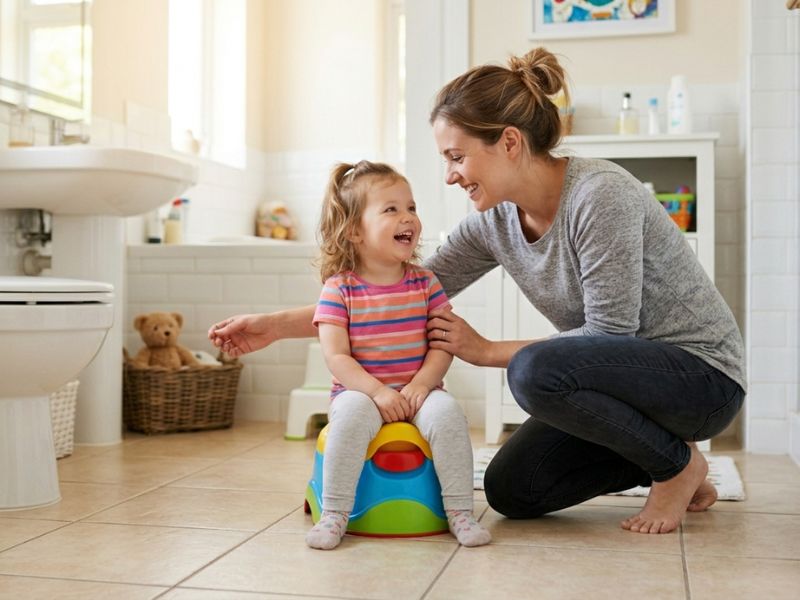
They’re having regular, predictable bowel movements. If you have a rough sense of when your child tends to poo each day, that predictability is a good sign. It suggests their digestive system is mature enough to make potty training manageable.
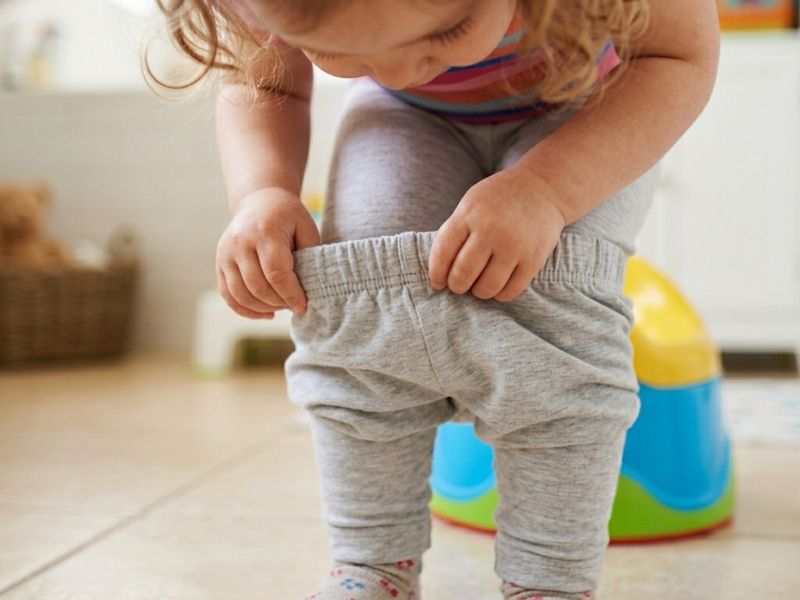
They can pull their trousers up and down. This sounds like a small thing but it’s genuinely important. A child who can’t manage their own clothing independently will struggle with getting to the potty in time. Practising pulling stretchy waistbands up and down during nappy changes is a good way to build this skill in advance.
They show awareness of going. Watch for signs that your child knows something is happening — going quiet, going to a corner, squatting, or telling you during or just after they’ve done a wee or a poo. This awareness is an important precursor to being able to anticipate and act in advance.
Cognitive and Emotional Signs of Readiness
They can follow simple instructions. Potty training involves a sequence of steps — recognising the urge, getting to the potty, pulling down clothing, sitting, wiping, pulling clothing back up, flushing, washing hands. A child who can follow simple two or three step instructions is much better equipped for this.
They understand what the potty is for. If your child knows what a potty or toilet is, has seen others use it, and has some concept of what wees and poos are, they have the cognitive foundation they need. Talking about it naturally and letting them come to the bathroom with you in the months before you start helps build this understanding.
They’re showing interest. Some children start asking questions about the toilet, wanting to sit on the potty, or showing curiosity about what older siblings or adults do. This interest isn’t essential — plenty of children train successfully without it — but it’s a very encouraging sign when it’s there.
They can communicate the urge, even non-verbally. Your child doesn’t need to be able to say “I need a wee” to be ready for potty training. A consistent gesture, a sign, or even just making eye contact and going to the bathroom area counts. What matters is that they have some way of letting you know.
They’re showing signs of independence and wanting to do things themselves. The toddler drive for autonomy that makes so many other things harder actually works in your favour with potty training. A child who wants to do things for themselves is often more motivated to master using the potty.
Signs That It Might Be Worth Waiting
Starting potty training during a period of significant change or stress — a new baby, a house move, starting nursery — is generally harder than waiting for a calmer period. Your child’s capacity to take on something new is genuinely reduced during times of upheaval, and it’s worth factoring that in.
If your child is showing strong resistance — getting upset at the mention of the potty, refusing to sit on it, becoming anxious — that’s a clear signal to back off and try again in a few weeks. Resistance almost always means the timing isn’t right, not that your child will never get there.

How to Prepare Before You Start
Once you can see the signs of readiness emerging, there are a few things you can do to set the process up well before you officially begin.
Let your child choose their potty or toilet seat if possible — having some ownership over it makes them more likely to engage with it. Start talking about it matter-of-factly: “Soon you’ll be able to use the potty like a big kid.” Read a few books about it together. Let them see you and other trusted adults use the toilet naturally.
Switching to pull-ups or training pants in the run-up can also help children start to tune into the sensation of being wet or dry in a way that an absorbent nappy doesn’t allow.
One Final Thing
Every child gets there in the end. Some take a few days, some take several months. Neither says anything meaningful about you or your child. Going at their pace, watching for the signs, and keeping the whole process as calm and low-pressure as possible is genuinely the most effective approach — even when it doesn’t feel like it.