
Farm animal crafts are a brilliant choice for preschoolers. The theme is familiar, the characters are fun, and there are so many different animals to work with that you can easily stretch it across several sessions without it feeling repetitive.
None of these crafts require specialist supplies. Most use things you’ll already have at home — paper plates, paint, cotton wool, egg boxes, and a few odds and ends from the recycling bin.
Paper Plate Sheep
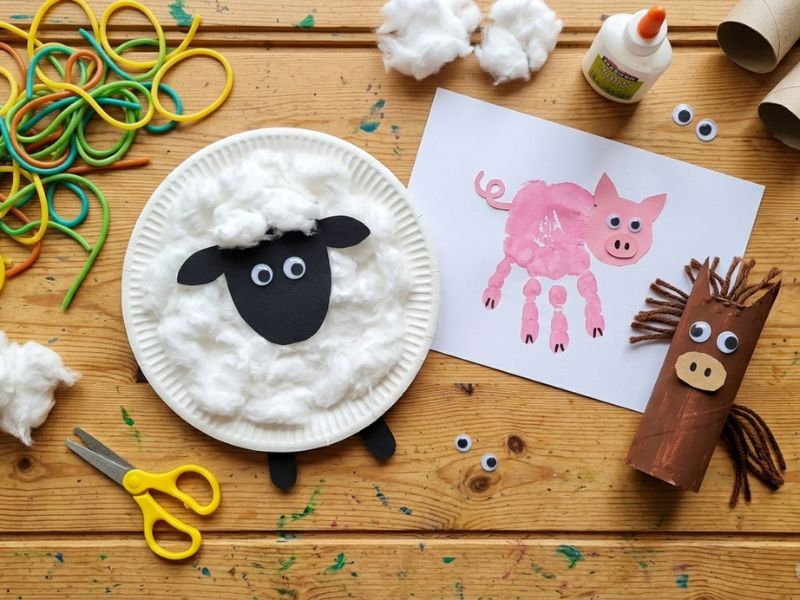
Paper plate sheep are one of those classic preschool crafts that genuinely stand the test of time. Paint a paper plate black or leave it white, then scrunch up small pieces of cotton wool and stick them all over the middle section. Add a black card face, two googly eyes, and four black card legs.
For a simpler version for younger toddlers, skip the cotton wool and use white paint dabbed on with a sponge instead.

Handprint Pigs
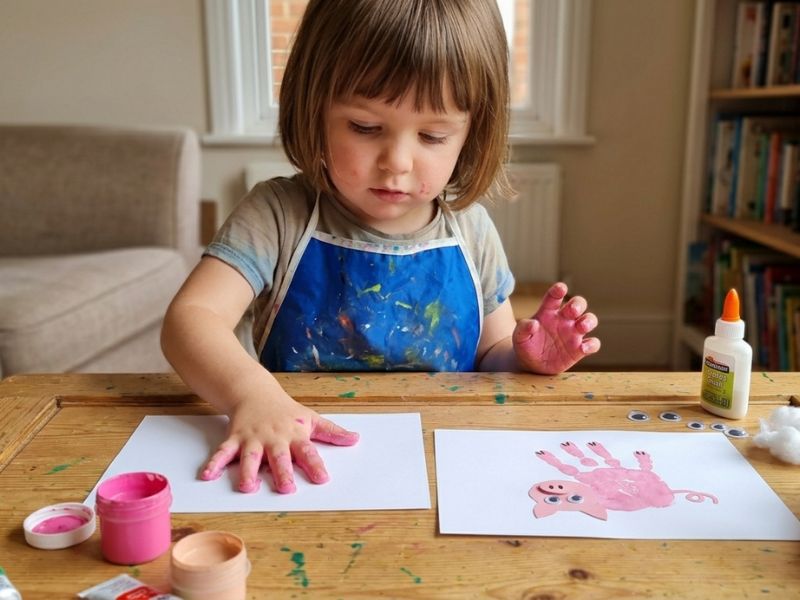
Paint your child’s palm and fingers pink and press it onto white card or paper. Once dry, the handprint becomes the pig’s body. Add a round snout, two small nostrils, googly eyes, a curly tail drawn in pen, and four stubby legs. These make lovely cards or can be cut out and used in a farm small world.
The conversation that happens while you’re making handprint animals — talking about what pigs eat, where they live, what sound they make — is just as valuable as the craft itself.
Egg Box Cows
Cut individual egg box cups apart and turn them upside down to make the cow’s body. Paint them white, then add black patches using a finger or a small brush. Stick on a small card head, googly eyes, a pink card snout, and four matchstick or toothpick legs pushed into the base.
These are fiddly enough to keep older preschoolers focused but the end result is satisfying and three-dimensional, which children love.
Paper Bag Chickens
Take a small paper lunch bag and stuff the bottom third with a little scrunched newspaper to give it shape. Twist the top to make the chicken’s head. Paint the whole thing yellow, then add a small orange card beak, googly eyes, and orange card feet tucked underneath. A few feathers from a craft shop or cut from yellow card add the finishing touch.
This one works well as part of an Easter or spring theme and is simple enough for even very young preschoolers with a little help.
Toilet Roll Farm Animals
Cardboard tubes are one of the most versatile craft materials for preschoolers and they work brilliantly for farm animals.
For a horse, paint a toilet roll brown, add a card mane cut in a fringe, four card legs, googly eyes, and a yarn tail.
For a duck, paint it yellow, add an orange card beak and feet, and a white or yellow card wing on each side.
For a pig, paint it pink, add a round card snout with two holes poked in for nostrils, pink card ears, and a pipe cleaner curled into a tail at the back.
Line them up along a windowsill once they’re done and you have an instant farm scene.
Sponge Painted Cows and Sheep
Cut a sponge into a simple cow or sheep body shape. Set out black and white paint in shallow trays and let your child stamp the shapes onto paper to build up a field full of animals. Add simple legs and faces with a marker pen once dry.
This is a lovely low-pressure craft for children who find more structured makes frustrating, and the results always look wonderful.
Fingerprint Ladybirds and Bees
Technically insects rather than farm animals, but bees and ladybirds belong firmly in the farm theme and fingerprint versions are perfect for preschoolers. Press a thumb into red or yellow paint and onto paper, then add spots or stripes and a simple face with a fine pen once dry. They look great scattered across a large piece of paper painted green as a field background.
Tips for Doing Crafts with Preschoolers
Prepare everything before you sit down. Having paint lids off, glue ready, and materials laid out means you can keep the momentum going rather than losing your child’s interest while you search for scissors.
Let go of the finished result. Preschool crafts are about the process — the squishing, the sticking, the painting. What it looks like at the end matters far less than what your child experienced while making it.
Keep sessions short. Twenty minutes of focused, engaged crafting is worth far more than an hour of frustration. Stop while they’re still enjoying it.
Display their work. Sticking finished crafts on the wall or fridge makes children feel genuinely proud of what they’ve made and encourages them to engage next time.