
If mealtimes in your house involve negotiation, tears, or a plate of untouched food scrapped into the bin every single evening, you are in very good company. Picky eating is one of the most common toddler challenges parents face, and it can feel incredibly stressful — especially when you’re worried your child isn’t getting the nutrition they need.
The good news is that most toddler fussiness is completely normal, there are things that genuinely help, and it almost always gets better with time.
Why Toddlers Are Picky Eaters
Understanding why toddlers become fussy eaters makes the whole thing feel slightly less personal — because it really isn’t about your cooking.
Around the age of one to two, many children go through a developmental phase called neophobia — a fear of new foods. From an evolutionary standpoint this actually makes sense: toddlers who were suspicious of unfamiliar foods were less likely to eat something harmful when they started becoming more independent. It’s hardwired, not a personality flaw.
Toddlers are also going through a significant push for autonomy at this age. Deciding what goes into their mouth is one of the few areas where they have genuine control, and many will exercise that control firmly regardless of what’s on the plate.

Appetite also naturally decreases after the first year. The rapid growth of babyhood slows down, and toddlers simply don’t need as many calories as parents expect. What looks like refusing to eat is often just a child eating the right amount for their body.
What Actually Helps
Divide the responsibility. A useful framework used by many dietitians is Ellyn Satter’s Division of Responsibility — the idea that your job as a parent is to decide what food is offered, when, and where. Your child’s job is to decide whether to eat it and how much. Releasing responsibility for the second part takes an enormous amount of pressure off mealtimes for everyone.
Offer new foods alongside familiar ones. Presenting an entirely unfamiliar meal is a recipe for refusal. Instead, make sure there’s always at least one thing on the plate your child reliably eats, alongside whatever you’re trying to introduce. This removes the all-or-nothing dynamic and means your child won’t go hungry even if they reject the new element.
Expose without pressure. Research consistently shows that children need to be exposed to a new food many times — sometimes up to fifteen or twenty — before they’re willing to try it. Simply having a food on the plate, even if it’s ignored, counts as exposure. Over time, familiarity breeds acceptance. Pressuring a child to try something, however, can create a negative association that sets things back further.
Keep mealtimes calm. Anxiety is contagious at the dinner table. If you’re visibly tense about what your child is eating, they’ll pick up on it and mealtimes will feel stressful for everyone. Easier said than done, but aiming for a neutral, low-pressure atmosphere makes a genuine difference.
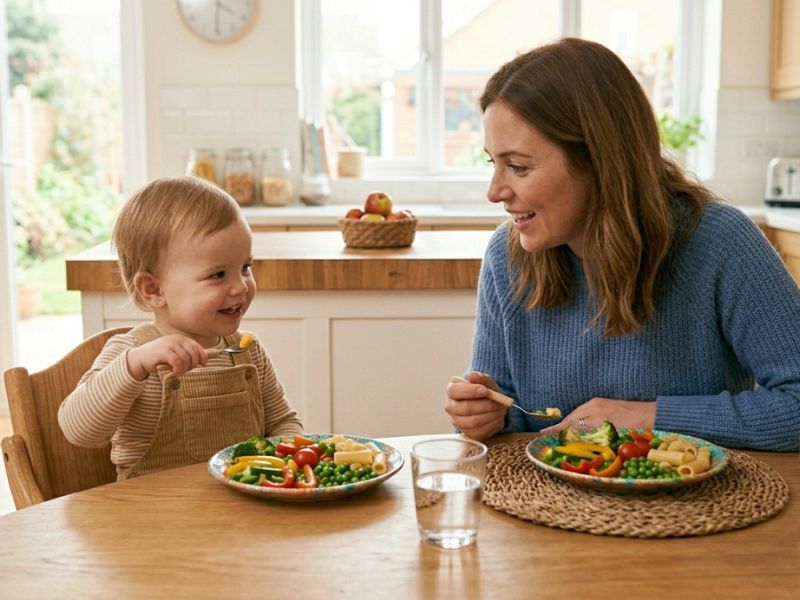
Eat together when you can. Children learn an enormous amount from watching others eat. Seeing adults and older siblings eat a wide range of foods without drama is one of the most powerful tools for broadening a toddler’s diet. It works slowly, but it works.
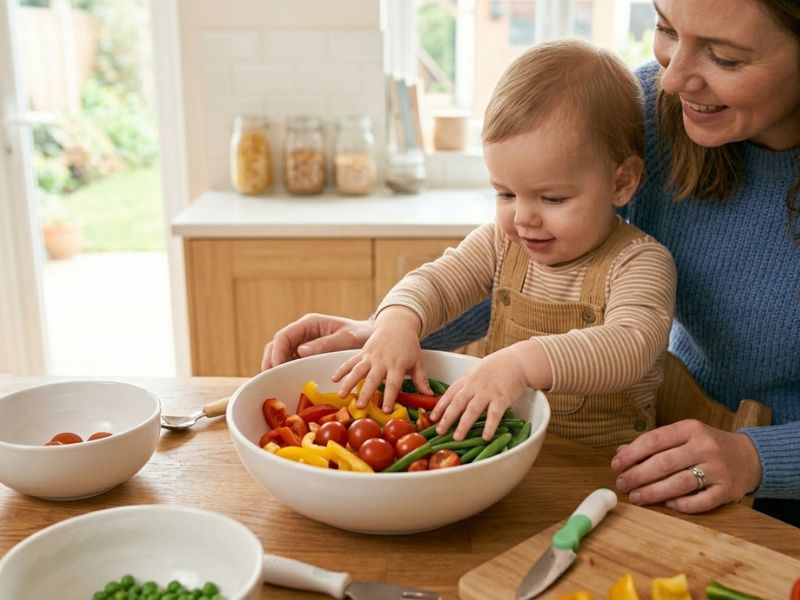
Get them involved in food. Toddlers who help prepare food are consistently more likely to eat it. This doesn’t need to be complicated — washing vegetables, stirring, pouring, tearing bread, arranging things on a plate. The ownership they feel over something they helped make changes their relationship with it.
Serve food in a low-pressure way. Family-style serving — putting dishes in the middle of the table and letting children choose what goes on their plate — gives toddlers a sense of control without giving them veto power over what’s available. Even reaching for the serving spoon themselves makes children more engaged with the food.
Try different textures and presentations. Sometimes the issue isn’t the food itself but how it’s prepared. A child who refuses cooked carrots might happily eat raw ones. A child who won’t touch a mixed dish might eat every component separately. It’s worth experimenting before writing off a food entirely.
What Doesn’t Help
Short order cooking. Making a separate meal every time your child refuses what’s served teaches them that refusal leads to something better. It’s exhausting for you and doesn’t help them expand their diet. One meal, served for everyone, with something familiar included, is a more sustainable approach.
Bribing with pudding. “Eat your vegetables and you can have dessert” elevates pudding to prized status and makes vegetables feel like a punishment to be endured. It also doesn’t teach children to enjoy a wider range of foods — it just creates a nightly negotiation. Offering dessert as a normal part of the meal, without conditions attached, takes the power out of it.
Hiding vegetables. Blending vegetables into sauces can feel like a win, but it doesn’t help children learn to accept those foods in their recognisable form. It can also backfire dramatically if your child ever discovers what’s in their favourite pasta sauce.
Making a big reaction. Gasping, sighing, cajoling, or showing obvious relief when your child eats something all put attention on the eating behaviour, which tends to make things worse. The goal is for food to feel unremarkable and normal.
When to Speak to Someone
Most toddler fussy eating is a normal developmental phase rather than a medical issue. However, it’s worth speaking to your GP or health visitor if your child is losing weight or not gaining as expected, is extremely distressed around food, has a very limited diet of fewer than twenty foods, is gagging or vomiting frequently at mealtimes, or if you’re very concerned about their nutrition.
In some cases, extreme food restriction can be linked to sensory processing differences or conditions like ARFID (avoidant restrictive food intake disorder), and early support from a specialist can make a real difference.
The Longer View
Most children who are picky toddlers become much more flexible eaters by the time they reach school age. The strategies above work slowly — this is months and years, not days and weeks — but they do work, and they protect the relationship between your child and food in a way that crash tactics don’t.
You’re doing better than you think.