
If you’ve never tried spaghetti sensory play, you’re in for a treat — and so is your toddler. It’s one of those activities that sounds a bit odd until you actually set it up and watch your child spend a genuinely impressive amount of time completely absorbed in it.
It’s cheap, it’s easy, and it uses something you almost certainly already have in the cupboard.

Why Spaghetti Works So Well for Sensory Play
Cooked spaghetti has a texture unlike anything else in a child’s sensory experience. It’s slippery, stretchy, cool, and slightly sticky all at once. For toddlers and preschoolers who are still building their understanding of the world through touch, that combination is endlessly fascinating.
It’s also completely safe to eat, which makes it a great option for younger toddlers who still put things in their mouths. And because it’s food, you don’t need to worry if it ends up on the floor — or in someone’s mouth.
How to Set It Up
Cook a batch of spaghetti according to the packet instructions, then drain it and rinse with cold water so it’s cool to touch. Toss it in a little olive oil or vegetable oil to stop it clumping together too much.
At this point you can either leave it as it is, or divide it into portions and add food colouring to each one. To colour it, put each portion in a zip-lock bag with a few drops of food colouring, seal it, and squish it around until the colour is distributed evenly. Leave it for a few minutes, then tip it all into your tray and mix the colours together.
Pour it into a tuff tray, a large bowl, or any shallow container and let your child get their hands in.
What to Add to Make It More Interesting
Spaghetti on its own will keep most toddlers busy, but you can extend the play with a few simple additions:
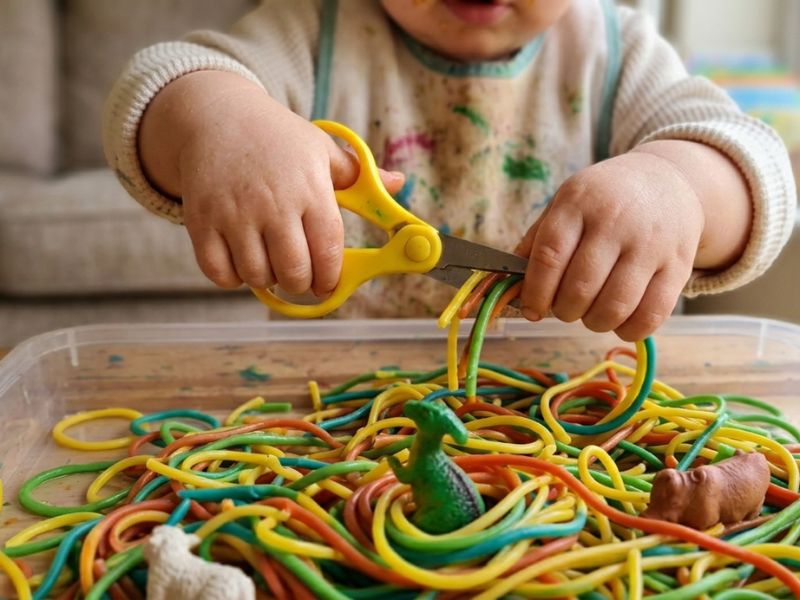
Blunt scissors — cutting spaghetti is wonderful for fine motor development and children find the snipping action very satisfying.
Small containers and spoons — scooping and transferring spaghetti from one container to another builds early maths skills around quantity and capacity.
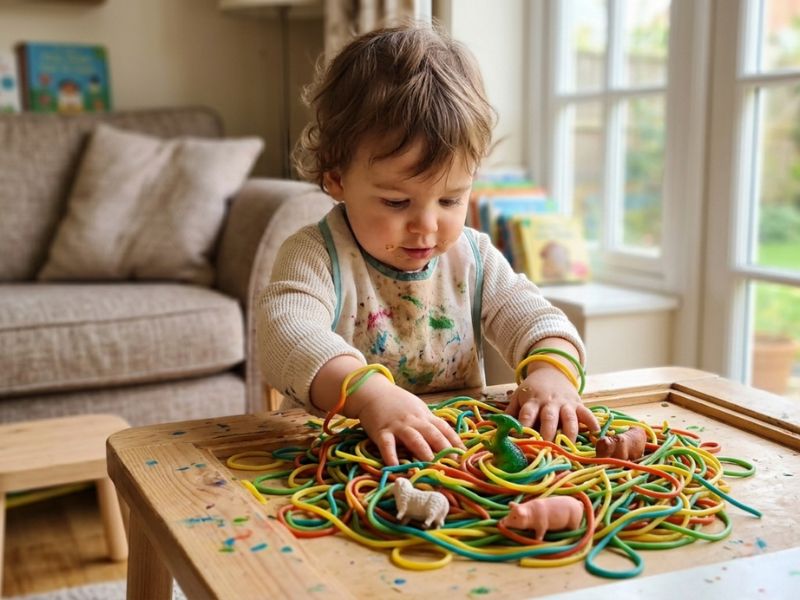
Small world figures — dinosaurs, farm animals, or jungle creatures hidden in a tangle of spaghetti adds a layer of imaginative play.
Loose parts — adding pebbles, shells, or buttons creates interesting contrasts in texture.
A muffin tin — filling each section of a muffin tin with spaghetti is a surprisingly engaging challenge for little hands.
Rainbow Spaghetti
If you want to make it more visually striking, rainbow spaghetti is the way to go. Colour several portions in different shades — red, orange, yellow, green, blue, purple — and mix them together in the tray. The result looks beautiful, photographs well for those activity records, and the colour mixing that happens as your child plays is a natural conversation starter.
How Long Will It Keep?
Cooked spaghetti for sensory play keeps in a sealed container in the fridge for two to three days, so you can set it up in the evening ready for the next day, or reuse it for a second session.
Once it starts to smell or dry out, it’s time to compost it or bin it.
Cleaning Up
Spaghetti is much easier to clean up than it looks. Let any pieces on the floor dry out slightly and they sweep up easily. Surfaces wipe down with a damp cloth. If your child has been playing in a tuff tray, most of it will stay contained anyway.
Playing outside or in the garden removes almost all of the cleanup stress entirely.