
If your little one is going through a dinosaur phase — and let’s be honest, so many of them do — a dinosaur tuff tray is one of the easiest and most engaging setups you can put together at home.
It doesn’t need to be elaborate. A few plastic dinosaurs, some sand or soil, and a handful of things from the garden is all it takes to create something your child will want to play with for hours.
Here are some simple dinosaur tuff tray ideas to try, along with tips on how to get the most out of them.
The Classic Dinosaur Landscape
This is the one to start with if you’re new to tuff trays. Pour kinetic sand, soil, or play sand into the base of the tray. Add rocks and pebbles of different sizes, a few sticks and leaves, and a small mirror or shallow dish of water for a lake. Place your plastic dinosaurs around the scene and let your child take it from there.

It sounds simple because it is — and that’s exactly why it works so well. Children at this age don’t need much to build a whole story around.
Dinosaur Dig
Fill the tray with kinetic sand or a mixture of sand and soil and bury plastic dinosaurs, toy bones, or small rocks beneath the surface. Give your child a paintbrush, a small spoon, and maybe a magnifying glass, and let them excavate.
This setup is great for children who love the idea of being a palaeontologist, and it encourages real concentration and careful, controlled hand movements.
Volcano Tuff Tray
Build a simple volcano shape using damp sand or mouldable kinetic sand. Nestle a small cup or pot into the top. When your child is ready, add a spoonful of bicarbonate of soda to the cup and pour in some vinegar with a dash of red food colouring. The resulting eruption goes down extremely well.
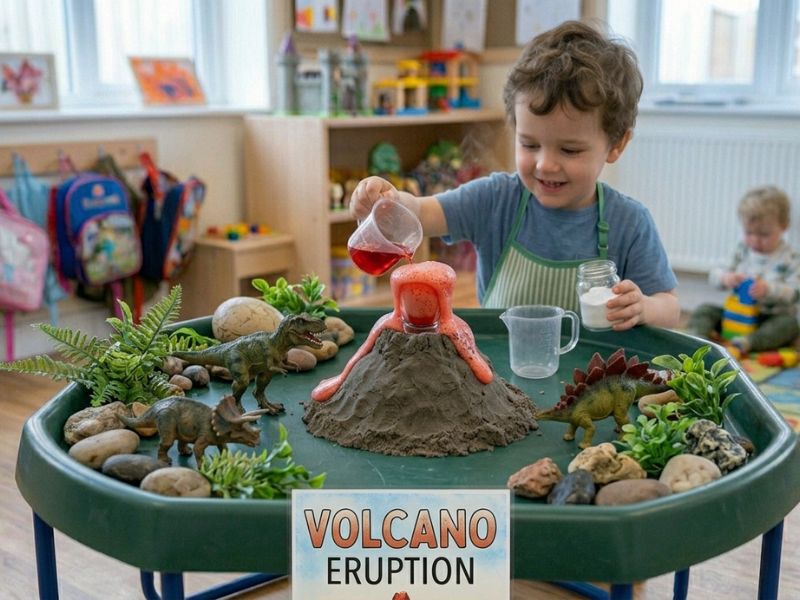
Surround the volcano with dinosaurs, rocks, and greenery for the full effect. This one is as much about the science conversation as the play itself — why does it bubble? What would the dinosaurs do?
Dinosaur Swamp
Pour a thin layer of water into the tray and add green food colouring to create a murky swamp effect. Add rocks and sticks for the dinosaurs to climb on, and scatter some plastic leaves or aquatic plants around the edges. Waterproof dinosaurs only for this one.
Children who love messy, hands-in play tend to gravitate towards this setup in particular.
Ice Age Rescue
Freeze small plastic dinosaurs in blocks of ice the night before — one or two per block works well. Place them in the tray and give your child warm water in a pipette or small jug, along with spoons and a paintbrush, to free them.
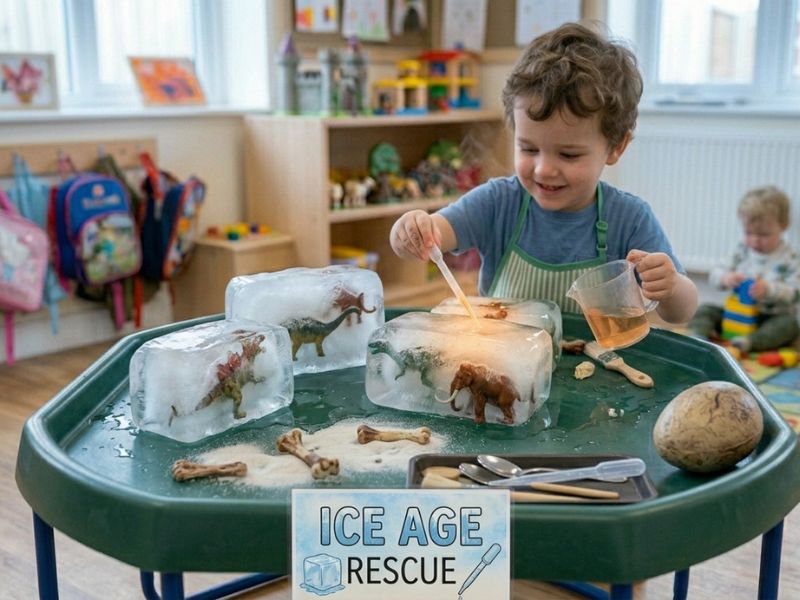
It takes patience and focus, which makes it especially good for children who need a quieter, more concentrated activity.
Dinosaur Footprints Tray
Fill the tray with a layer of damp sand or air-dry clay and let your child press their dinosaur figures into it to make footprints and tracks. You can extend this by talking about the different shapes each dinosaur makes, following the trail, or making up a story about where the dinosaurs were going.
For an extra activity, mix up some paint and let them stamp the dinosaur feet onto paper before or after the tray play.
Jungle Dinosaur World
Use shredded green paper, tissue paper, or real leaves and grass clippings as a jungle floor. Add plastic trees or plants if you have them, or use twigs and branches from outside. Scatter several different dinosaurs through the undergrowth.
This works particularly well for children who enjoy sorting and categorising — you can introduce ideas like which dinosaurs are herbivores and which are carnivores, or group them by size.
Tips for Getting the Most Out of Dinosaur Tuff Tray Play
Let them add to it. Once the basic setup is in place, let your child bring in their own additions — more figures, objects from around the house, water, mud. The more ownership they feel, the longer and more deeply they’ll play.
Ask open questions. Rather than directing the play, try asking things like “I wonder what happens next” or “where do you think that dinosaur lives?” It extends their language and keeps the story going without taking it over.
Leave it out. If space allows, leaving the tray set up for a day or two lets your child revisit it and build on their ideas. Play that comes back to something familiar is often richer than starting fresh each time.
Use real natural materials where you can. Sticks, stones, leaves, and soil all add a sensory dimension that plastic props alone can’t replicate — and they’re free.
See more: