
If you’ve recently discovered the world of tuff trays and aren’t quite sure where to start, you’re in the right place.
Tuff trays — sometimes called tuff spots — have become a go-to for parents of young children, and once you get the hang of them, they’re genuinely brilliant. They contain the mess, they spark imaginative play, and they support so much early learning without ever feeling like a lesson.
This post shares 20+ tuff tray ideas for preschoolers that are easy to set up, use things you likely already have at home, and will keep your child absorbed for far longer than you’d expect.
What Is a Tuff Tray?
A tuff tray is a large, shallow plastic tray — usually around 100cm square — originally designed for the building trade. Early years educators discovered they were perfect for play, and parents quickly followed. They’re tough, easy to clean, and deep enough to contain most of the mess.
You don’t need to spend much. The classic black tuff tray is widely available online, but a large under-bed storage box or even a plastic storage lid works just as well at home.
Why Tuff Trays Work So Well for Preschoolers
Children aged 3–5 learn best through hands-on, sensory experiences. Tuff tray activities naturally support:
- Fine motor development through scooping, pouring, and manipulating small objects
- Imaginative and small world play
- Early language and communication skills
- Simple maths concepts like filling, emptying, sorting, and comparing
- Independent, child-led exploration
They’re also self-contained, which makes them genuinely useful for parents who need their child occupied while they get something done.
What You’ll Need to Get Started
Most tuff tray setups don’t require specialist supplies. A good starting collection includes:
- Small world figures — animals, vehicles, people
- Loose parts — pebbles, pine cones, pasta, buttons, dried lentils or rice
- Basic craft materials — playdough, kinetic sand, paint
- Natural materials from the garden — leaves, sticks, soil, flowers
The majority of ideas below can be set up in under ten minutes.
20+ Tuff Tray Ideas for Preschoolers
Dinosaur World
Pour in kinetic sand or soil as a base, add rocks, plastic dinosaurs, and a few leaves or small plants. A small tray of water makes a great lake. This is one of those setups children return to again and again, building on the story each time.
See our dinosaur tuff tray ideas for more inspiration.
Coloured Rice Sensory Tray
Dye dried rice with food colouring (mixed with a splash of white vinegar and left to dry overnight), then pour into the tray alongside spoons, cups, and small containers. Simple to prepare and endlessly satisfying for little hands.
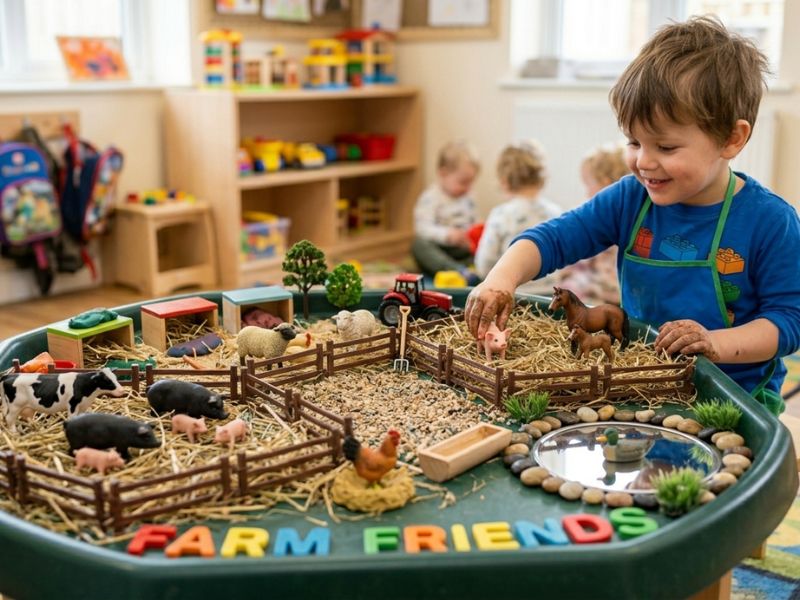
Farm Animals Small World
Use straw or hay as a base, add plastic farm animals, mini fences or building blocks to create fields, and a small mirror as a pond. A classic setup that works well even for the youngest preschoolers.
Muddy Puddles Tray
Mix soil and water to make proper mud. Add toy wellies, rubber ducks, and a few pebbles. Yes, it’s messy — but it’s exactly the kind of sensory experience that young children genuinely need.
Autumn Loose Parts
Collect leaves, acorns, conkers, pine cones, and twigs from the garden or a walk. Lay them in the tray and let your child sort, arrange, and create freely. No instructions needed.
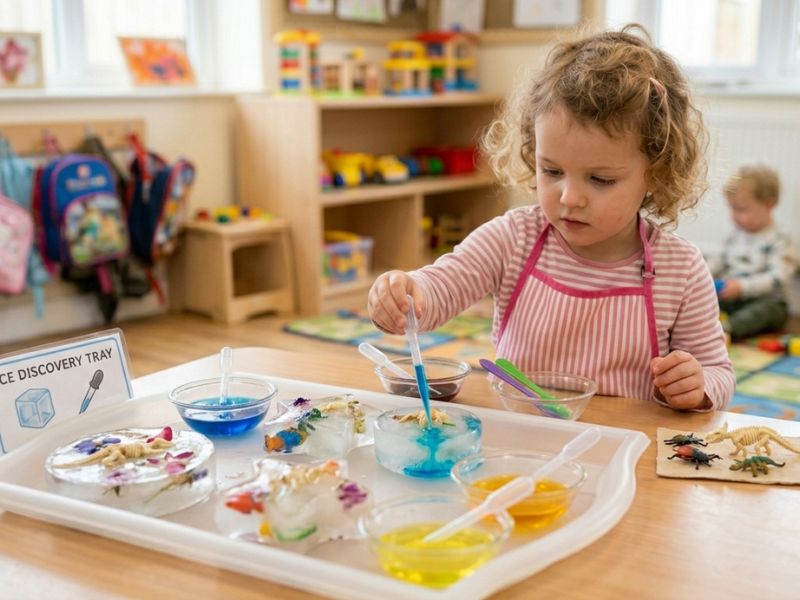
Ice Discovery Tray
Freeze small plastic toys, flowers, or bugs in blocks of ice the night before. Put them in the tray with pipettes, warm water, and spoons so your child can work to free them. Great for concentration and early science conversations about melting and temperature.
Alphabet or Number Hunt
Bury foam letters or numbers in sand, rice, or oats. Give your child a simple picture list to match against and let them hunt. Low-pressure and surprisingly engaging.
Transport Small World
Draw roads on a sheet of card and lay it in the base of the tray. Add toy cars, lorries, and a few small buildings. A handful of gravel or dried pasta adds texture. Perfect for children who love vehicles.
Playdough Builder Tray
Set out playdough alongside loose parts — matchsticks, googly eyes, dried spaghetti, buttons, leaves. This kind of open-ended invitation to create is brilliant for imaginative thinking and fine motor development.
Rainbow Spaghetti
Cook spaghetti, divide it into portions, and mix each with a little food colouring and oil. Combine in the tray. It looks wonderful, it’s completely safe for younger children who put things in their mouths, and it keeps them busy for ages.
Mini Garden or Planting Tray
Fill with compost and add seeds, small trowels, and a watering can. Cress and sunflower seeds are ideal. This works well as a lead-in to actual gardening and gives children a real sense of responsibility.
Ocean Small World
Add blue water (a drop of food colouring works well), sand along one edge, sea creatures, shells, and pebbles. Blue cellophane underneath the tray adds a lovely visual effect if you want to take it a step further.
Painting Tray
Line the tray with paper, add blobs of paint, and let your child go. Toy cars driven through the paint, hand prints, rollers — all great. The tray catches the splashes and makes cleanup much easier.
Mark-Making Tray
Pour a thin layer of sand, flour, or shaving foam into the tray. Let your child draw patterns, letters, or shapes with a finger or a stick. Smooth it over and start again. A really simple and effective way to support pre-writing skills.
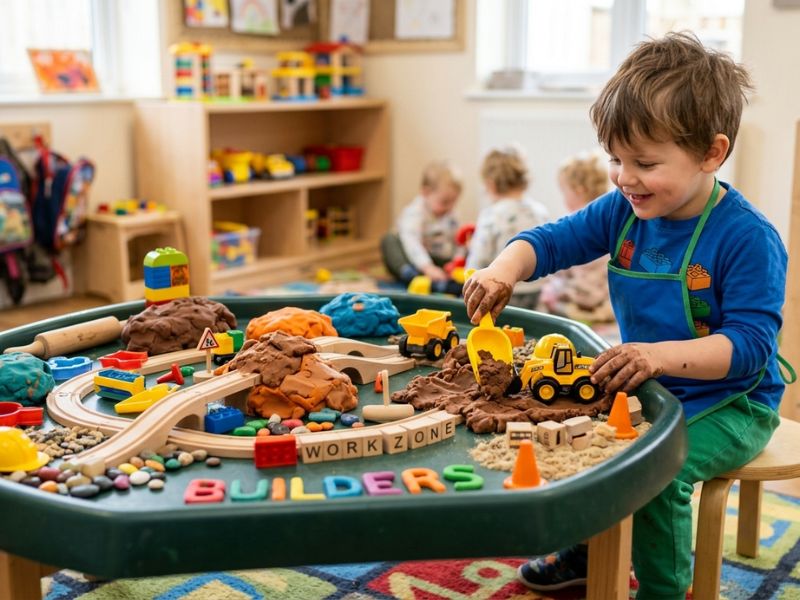
Construction Site
Use gravel, sand, or soil as a base and add toy diggers, dumper trucks, and a few wooden blocks. Children who love building will be completely absorbed in this one.
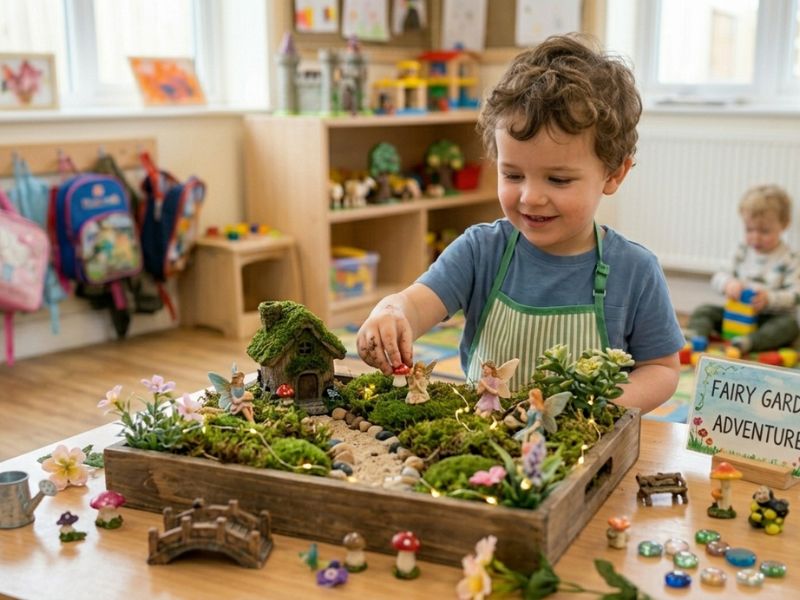
Fairy Garden
Moss, small flowers, petals, tiny stones, and a few fairy figures. Add a mirror as a pond. Magical for children who love fantasy play, and genuinely beautiful to set up together.
Jungle Explorer
Use shredded green paper or tissue as the jungle floor, add plastic jungle animals and some sticks. A small spray bottle of water so they can “water the jungle” adds an extra layer of fun.
Baking Tray
Flour, a rolling pin, cutters, spoons, and muffin tins. Children who love watching you cook will be in their element. This also works really well as a parallel activity while you’re actually baking.
Treasure Hunt
Bury gold coins or plastic gems in kinetic sand. Add a hand-drawn treasure map on brown paper. Brilliant for children who love adventure stories or pirates.
Gloop (Oobleck) Tray
Mix cornflour and water — roughly two parts cornflour to one part water — to make oobleck, the substance that behaves like both a liquid and a solid. This is one of those activities that genuinely fascinates children (and adults). Just be prepared: it is extremely messy.
Seasonal Trays
Tie your tuff tray into whatever’s happening in the calendar — a winter small world with fake snow and penguins, an Easter egg hunt in shredded grass, a bonfire night scene with red, orange, and yellow tissue paper. It keeps play feeling fresh throughout the year.
Tips for Making Tuff Trays Work at Home
Keep it simple. The most elaborate setups aren’t always the most played-with. A tray of lentils and a few spoons can be just as absorbing as a carefully curated scene.
Follow your child’s interests. A child obsessed with trains will get far more from a transport tuff tray than a fairy garden, however pretty it looks. Use what they love as your starting point.
Let them help set it up. Older preschoolers often enjoy building the scene as much as playing with it. Pouring the rice together, deciding where the animals go — that’s all part of the experience.
Step back once it’s ready. Resist the urge to direct the play. You’ll often be surprised what they create when left to lead.
Store materials in labelled tubs. Keeping kinetic sand, loose parts, and small world figures sorted means you can set up quickly and they can help tidy up.
How Often Do You Need to Do This?
You don’t need to set up a tuff tray every day. Once or twice a week is plenty for most families. Some setups — particularly small world scenes — can be left out for children to revisit over several days, which often deepens the play naturally.
If time is short, the simplest setups are often the best ones anyway.